
Culture
A Deep Dive into Bangkok’s Thai Culture
5 minutes
3rd June 2024
 by Malayanur Rohit
From Buddhist temples to Thailand's history
Thailand's energetic capital, Bangkok, is a metropolis where the contemporary bustle of the country is inextricably entwined with the spiritual core of Thai culture. Bangkok's Thai culture, steeped in centuries-old customs, is heavily impacted by Buddhism, which serves as the majority of the city's residents' compass. Beautiful temples, or "wats," dot the city. Places of devotion and serenity like Wat Phra Kaew and Wat Arun are only two examples.
Bangkokians exemplify the Buddhist precepts of mindfulness, compassion, and respect in their day-to-day existence. The city's spiritual fabric is deeply woven with customs like giving alms to monks before daybreak and taking part in calm temple rites. Celebrations like Songkran and Loy Krathong highlight the profound cultural respect for water and rebirth.
Bangkok's spiritual heart pulses strongly amid its modern skyscrapers and busy streets, bringing together the best aspects of both modern life and old knowledge in a harmonic whole that invites tourists to engage with the city's rich cultural legacy.
Wat Pho
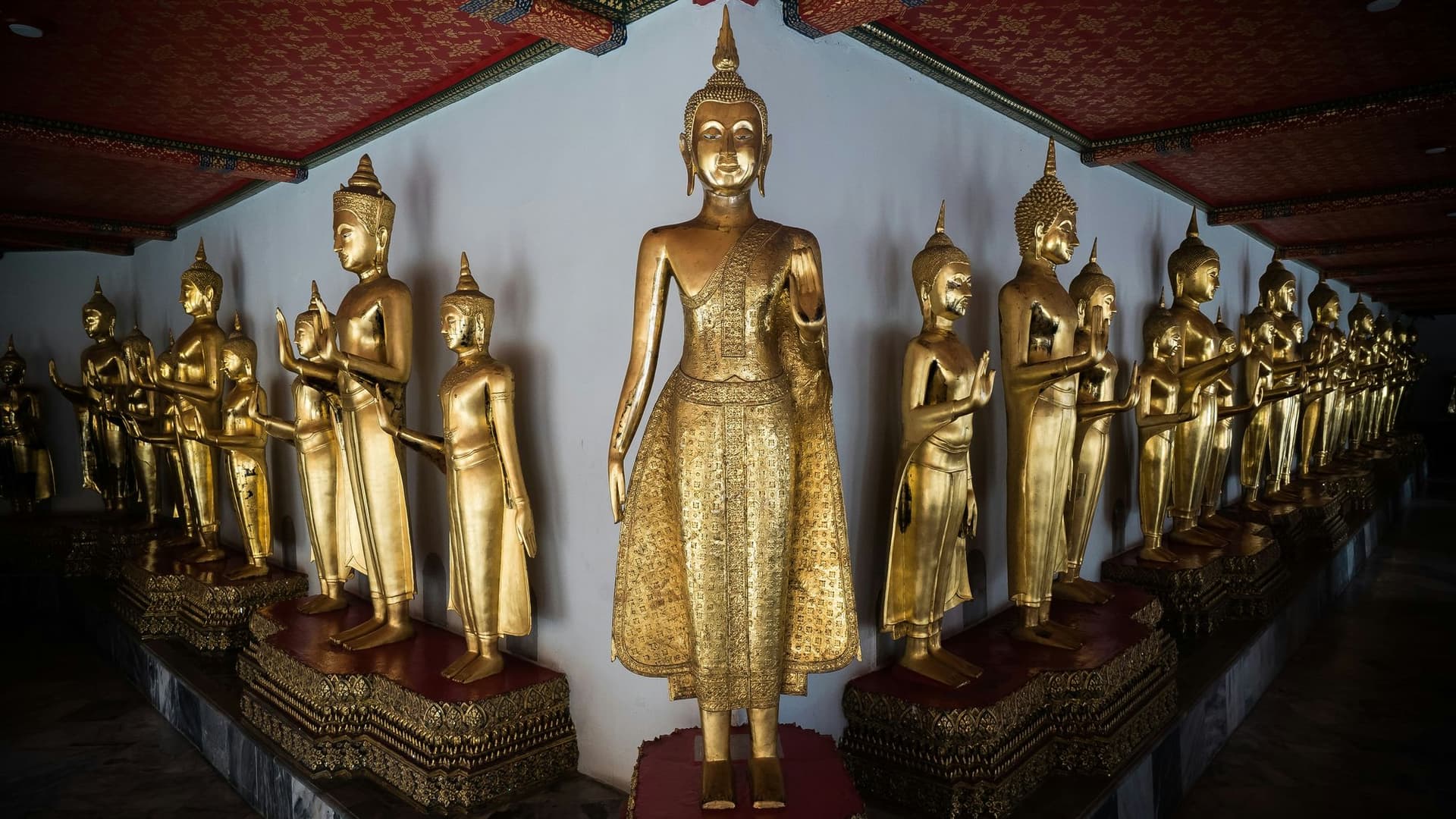
Buddha statue in Wat Pho - Courtesy of Photographer
The Temple of the Reclining Buddha, or Wat Pho, is a revered landmark in the centre of Bangkok and is well-known for its enormous historical and cultural significance. Wat Pho, one of Thailand's biggest and oldest temples, is a reminder of the nation's rich Buddhist past.
The majestic 46-meter-long, gold-leafed Reclining Buddha statue is the temple's most well-known attraction. This magnificent image, which symbolises the Buddha's ascension into Nirvana, is a potent representation of serenity and enlightenment. Gazing at this magnificent monument, visitors frequently experience a profound sense of respect and tranquility.
At Wat Pho, which also houses the nation's first public school, one may get traditional Thai medicine and massage. The elaborate paintings and inscriptions that cover the walls of the temple communicate ancient knowledge about a variety of subjects, including anatomy and healing techniques. As a result, Wat Pho serves as both a place of devotion and a living archive of traditional Thai knowledge.
With its immaculate gardens, revered stupas, and contemplative areas, the temple complex's tranquil atmosphere encourages reflection and spiritual renewal. More than just a historical site, Wat Pho is a hallowed area where one may sense the spiritual core of Thai society and feel a strong connection to the nation's religious and cultural heritage.
Wat Arun
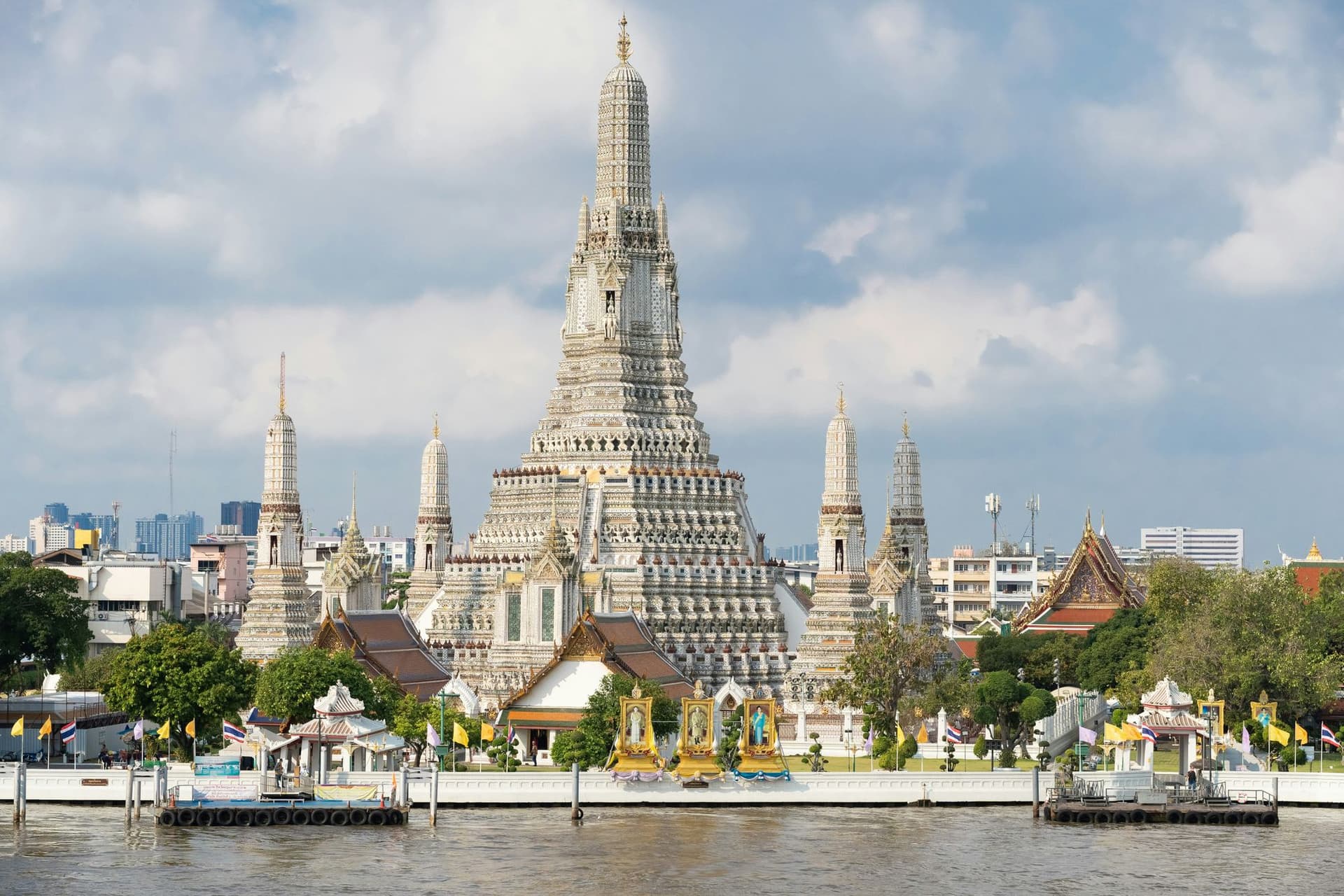
Exterior view of Wat Arun Temple - Courtesy of Photographer
One of Bangkok's most recognisable and spiritually significant monuments, Wat Arun, often called the Temple of Dawn, is magnificently located on the western bank of the Chao Phraya River. The Hindu goddess of morning, Aruna, is honoured in this hallowed temple, which reflects its breathtaking splendour at daybreak.
Rising to a height of 79 metres, the temple's central prang (tower) is decorated with elaborate flower designs crafted from vibrant Chinese porcelain and seashells. In Buddhist mythology, Mount Meru is the centre of the cosmos, and this artwork represents that centre. Wat Arun glows heavenly, reflecting sunlight off its elaborate spires and representing the spiritual enlightenment that is the goal of Buddhist meditation.
Since the Ayutthaya era, Wat Arun has been an important religious monument that serves as a lighthouse for enlightenment and spiritual awakening. Its beautiful gardens and calm environs offer a meditative and contemplative space that invites guests to establish a profound spiritual connection with Thai Buddhism.
In addition to providing beautiful views of Bangkok and the river, ascending the steep stairs of the central prang represents a path towards enlightenment and greater understanding. The temple complex's spiritual atmosphere is enhanced by the lovely pavilions and shrines devoted to different deities.
Beyond only being a stunning piece of architecture, Wat Arun is a holy place where the interaction of light and structure uplifts the soul and instills a deep sense of reverence and serenity in everyone who visits.
Grand Palace
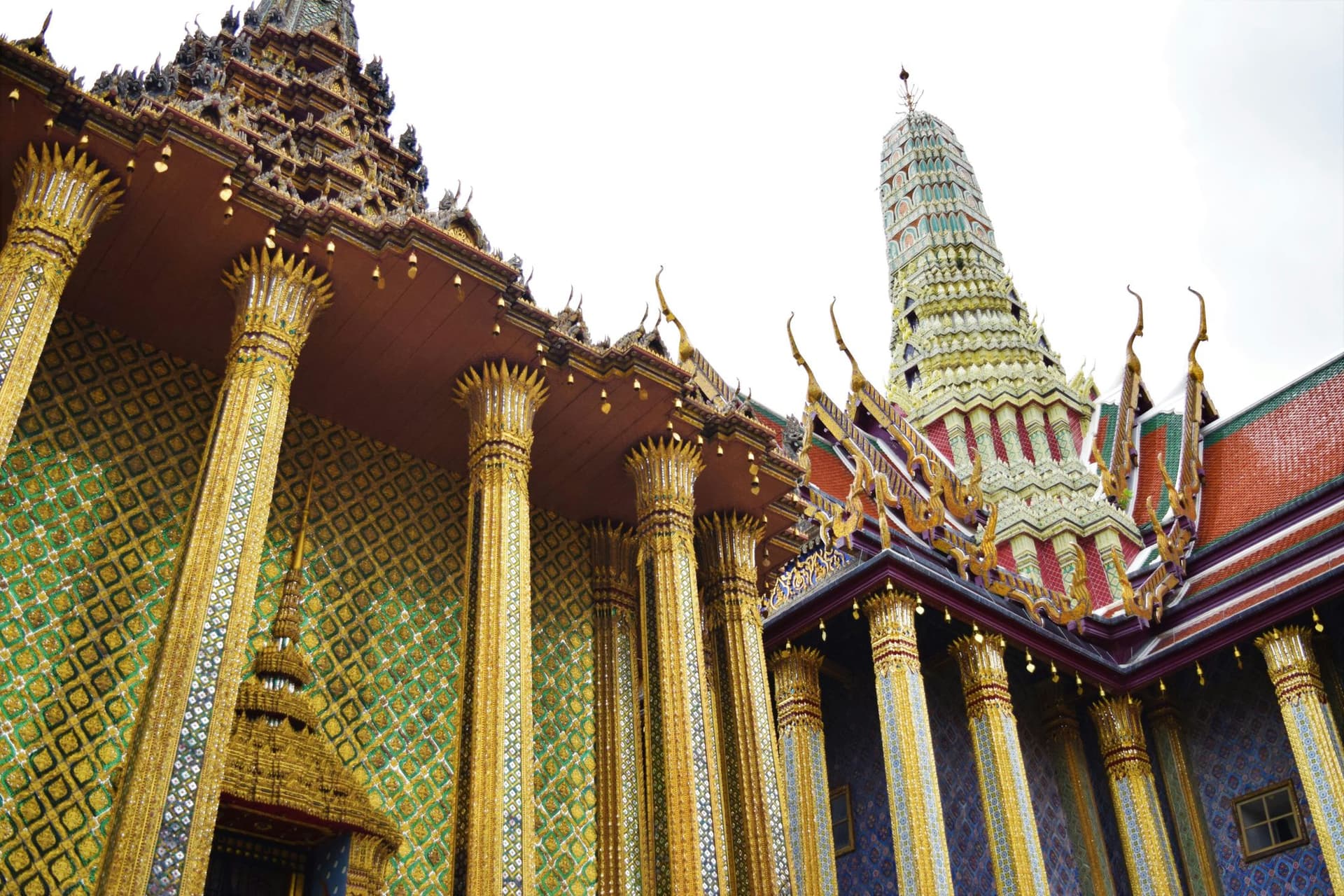
Exterior view of the Grand Palace - Courtesy of Photographer
Bangkok's Grand Palace is a striking representation of Thailand's illustrious cultural and religious past. This majestic structure, which has been the royal house since 1782, is not only a profound spiritual centre but also a symbol of Thailand's monarchy.
One of the most revered locations in Thai Buddhism is Wat Phra Kaew, the Temple of the Emerald Buddha, which is located in the centre of the Grand Palace. Constructed from a single jade stone, the Emerald Buddha is said to bestow wealth and protection to the realm. The statue, dressed in changing seasonal garments that the King wears, symbolises the union of religious fervour with regal customs.
The Grand Palace's architecture, which has elaborate spires, gilded sculptures, and colourful paintings illustrating epic tales from the Ramakien, is a harmonic fusion of traditional Thai and European elements. There is a sense of holiness and reverence created by the many spiritual and ceremonial purposes served by each building on the royal grounds.
Walking through the immaculately kept gardens and courtyards typically leaves visitors feeling amazed and at peace. The Grand Palace is more than just a historical landmark; it is a dynamic representation of Thailand's spiritual and cultural ethos, where the royal and the divine live together and provide a strong link to the country's history and soul.

Leave the planning to a local expert
Wat Benchamabophit
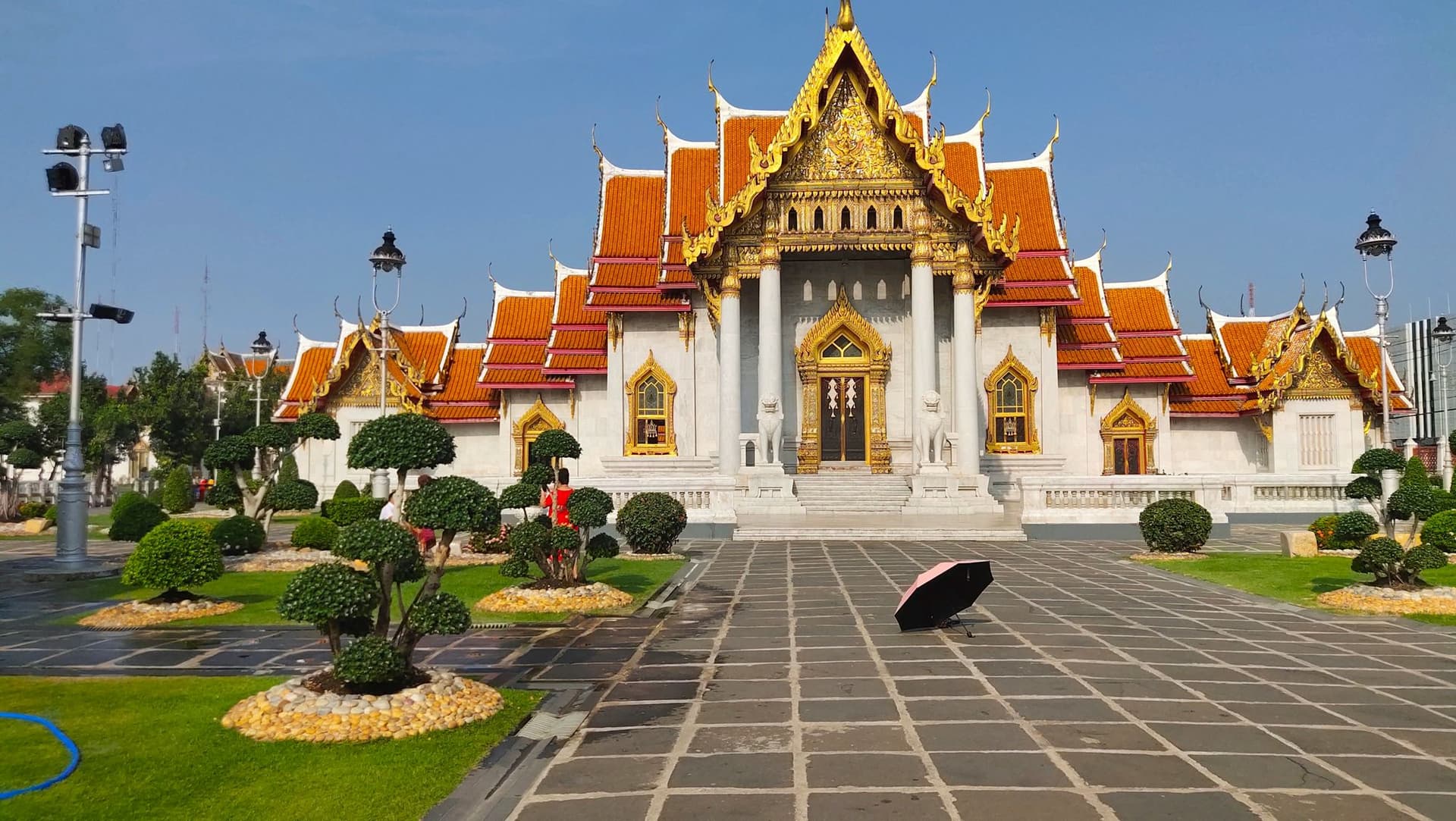
Wat Benchamabophit Exterior view - Courtesy of Photographer
The Marble Temple, or Wat Benchamabophit, is a calm and stately representation of Thai spirituality and architectural genius in Bangkok. Built in the late 1800s, this venerated temple represents an era of creative creativity and cultural synthesis. It features a harmonic combination of traditional Thai and European neo-classical styles.
The main ordination hall of the temple is made of Italian Carrara marble, which gives the building its name and radiant splendour. A sense of celestial grace and holy tranquilly is evoked by the intricately carved gables, beautiful columns, and sweeping multitiered roofs crowned with golden finials.
Phra Buddha Chinnarat, a majestic golden Buddha statue that exudes a profound atmosphere of calm and enlightenment, is the main attraction of Wat Benchamabophit. 52 Buddha sculptures representing diverse mudras (hand gestures) and styles from many ages and places line the temple courtyard, providing a thorough spiritual journey through the Buddha's teachings and iconography.
Wat Benchamabophit's beautiful ambiance and well kept grounds offer the perfect backdrop for introspection and meditation, which frequently inspires feelings of deep respect and tranquilly among visitors. The temple is a living museum of Buddhist art and culture in addition to being a place of prayer.
Wat Benchamabophit invites everyone to feel its serene and illuminating presence, serving as a witness to the Thai Buddhist tradition's timeless beauty and profound spirituality.
Conclusion
These spiritual places in Bangkok shaped the city as we know it today. The influence and its teachings can be seen all over the city, making it a true spectacle for tourists and local Thai people to marvel at.