
Gandhi Museum
.jpeg&w=1920&q=75)
.jpeg&w=1920&q=75)
.jpeg&w=1920&q=75)
.jpeg&w=1920&q=75)
Overview
The Gandhi Memorial Museum, located in the historic city of Madurai, Tamil Nadu, is one of the five Gandhi Sangrahalayas (museums) in India dedicated to Mahatma Gandhi, the Father of the Nation. The museum houses an extensive collection of artifacts, photographs, and documents related to Gandhi's life and the Indian independence movement. It serves as an important educational resource and a place of pilgrimage for those inspired by Gandhi's principles of nonviolence and truth.
Historical Significance:
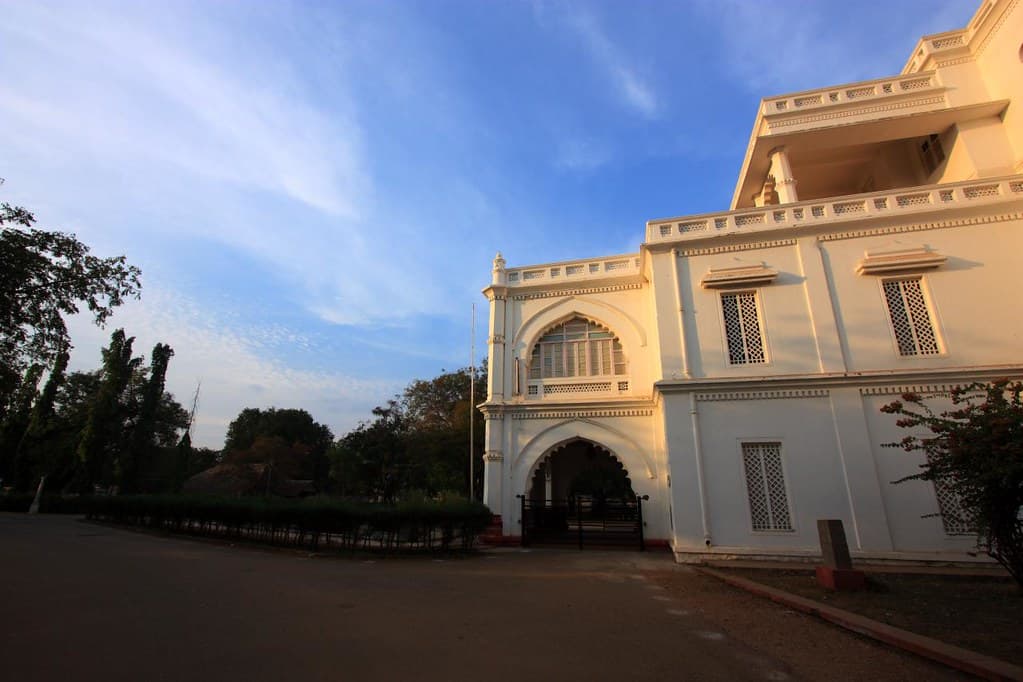
Established in 1959, the Gandhi Memorial Museum in Madurai commemorates the role of Mahatma Gandhi in India's struggle for freedom. The museum is housed in the Tamukkam Palace, which was gifted by the Nattukottai Chettiar community to honor Gandhi. Madurai holds a special place in Gandhi's life, as it was here in 1921 that he decided to adopt the loincloth as his attire, symbolizing his commitment to the poor.
Architectural Details:
Colonial Influence: The museum is housed in the Tamukkam Palace, a building with a blend of colonial and traditional architectural elements, featuring spacious halls and high ceilings.
Exhibition Halls: The museum's layout includes several exhibition halls that display different aspects of Gandhi's life and the freedom movement.
Library: The museum also houses a library with a vast collection of books, letters, and manuscripts related to Gandhi and the Indian independence movement.
Key Features and Attractions:
Exhibition Galleries: The museum's galleries are divided into various sections, each focusing on different phases of Gandhi's life, from his early years to his leadership in the independence movement.
Personal Artifacts: The museum showcases personal items used by Gandhi, including his sandals, spectacles, and spinning wheel (charkha).
Photographic Gallery: A comprehensive collection of photographs documenting significant events in Gandhi's life and the freedom struggle.
India Fights for Freedom: This section presents a chronological account of India's struggle for independence, highlighting major events and key figures involved in the movement.
Visual Biography: A detailed visual biography of Gandhi, illustrating his journey and the impact of his principles on Indian society.
Nearby Attractions:
Meenakshi Amman Temple: A renowned Hindu temple dedicated to Goddess Meenakshi and Lord Sundareswarar, located a few kilometers from the museum.
Thirumalai Nayak Palace: A 17th-century palace known for its architectural grandeur, situated close to the museum.
Koodal Azhagar Temple: An ancient temple dedicated to Lord Vishnu, showcasing exquisite architecture and religious significance.

Leave the planning to a local expert
Sustainability and Conservation:
Artifact Preservation: Continuous efforts are made to conserve and restore the artifacts and documents housed in the museum.
Educational Programs: The museum conducts educational programs and workshops to raise awareness about Gandhi's principles and sustainable living.
Green Initiatives: Implementation of eco-friendly practices in the maintenance of the museum premises.
Tips for Visitors:
Opening Hours: The museum is generally open from morning to evening, but it’s advisable to check specific timings before planning your visit.
Guided Tours: Hiring a guide can provide deeper insights into the exhibits and enhance the overall experience.
Photography: Photography may be restricted in certain areas, so it’s best to inquire about the museum’s policies.
Respectful Conduct: Maintain a respectful demeanor as the museum is a place of historical and cultural significance.