
Mysore Palace
Overview
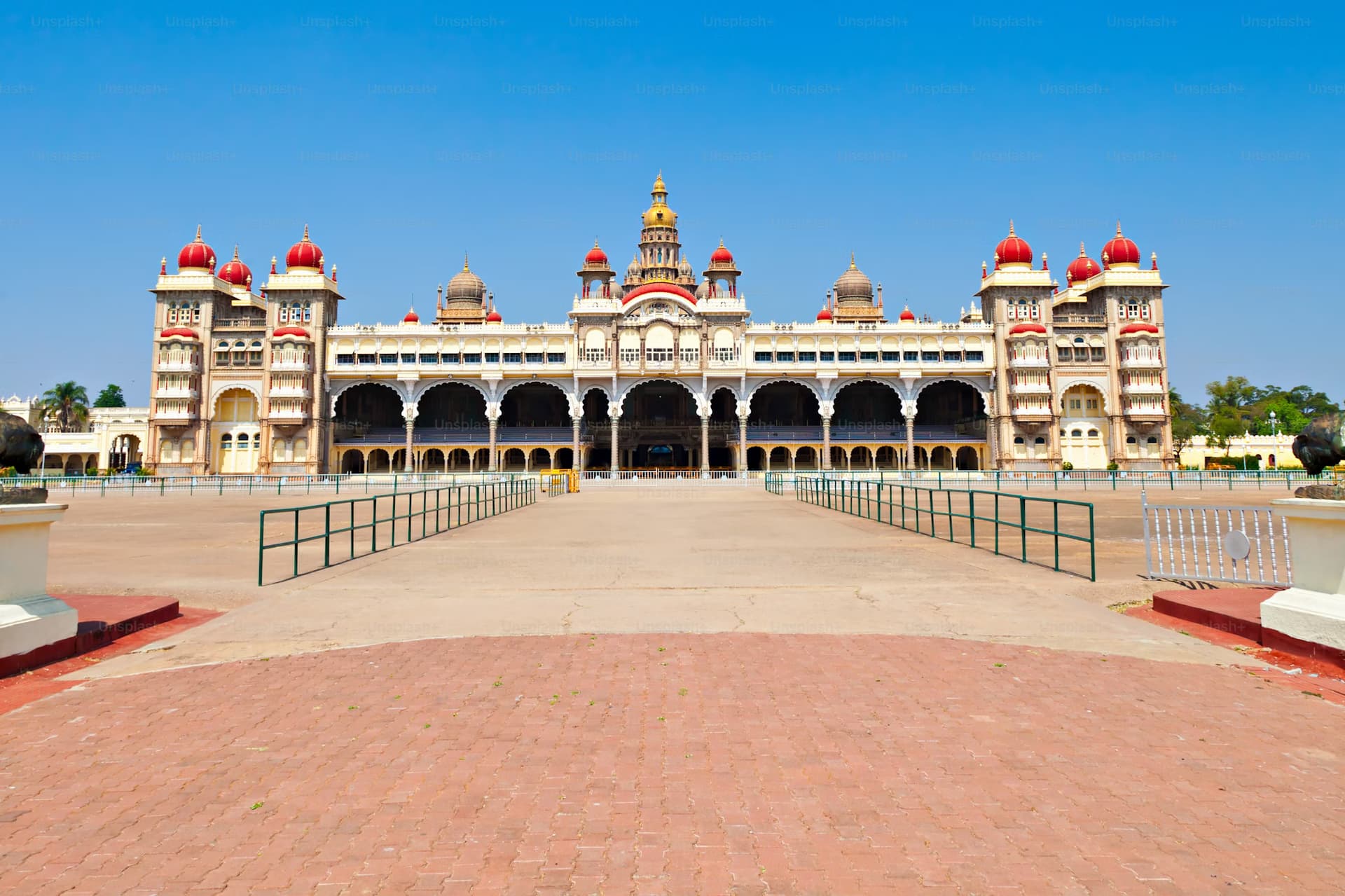
Mysore Palace, located in the city of Mysore, Karnataka, is one of India’s most iconic and grandiose palaces. Also known as the Amba Vilas Palace, it was the royal residence of the Wadiyar dynasty, who ruled the Kingdom of Mysore. The palace stands as a testament to the opulent architecture and cultural heritage of the region.
Historical Significance:
The Mysore Palace has a rich history that dates back to the 14th century. The original structure was a wooden palace built by the Wadiyars. However, the current palace was constructed between 1897 and 1912 after the previous palace was destroyed by a fire. The construction was overseen by the then Maharaja Chamarajendra Wadiyar X and was designed by the British architect Henry Irwin. The palace reflects the grandeur of the Wadiyar rulers and their influence on Mysore’s cultural and architectural landscape.
Architectural Details:
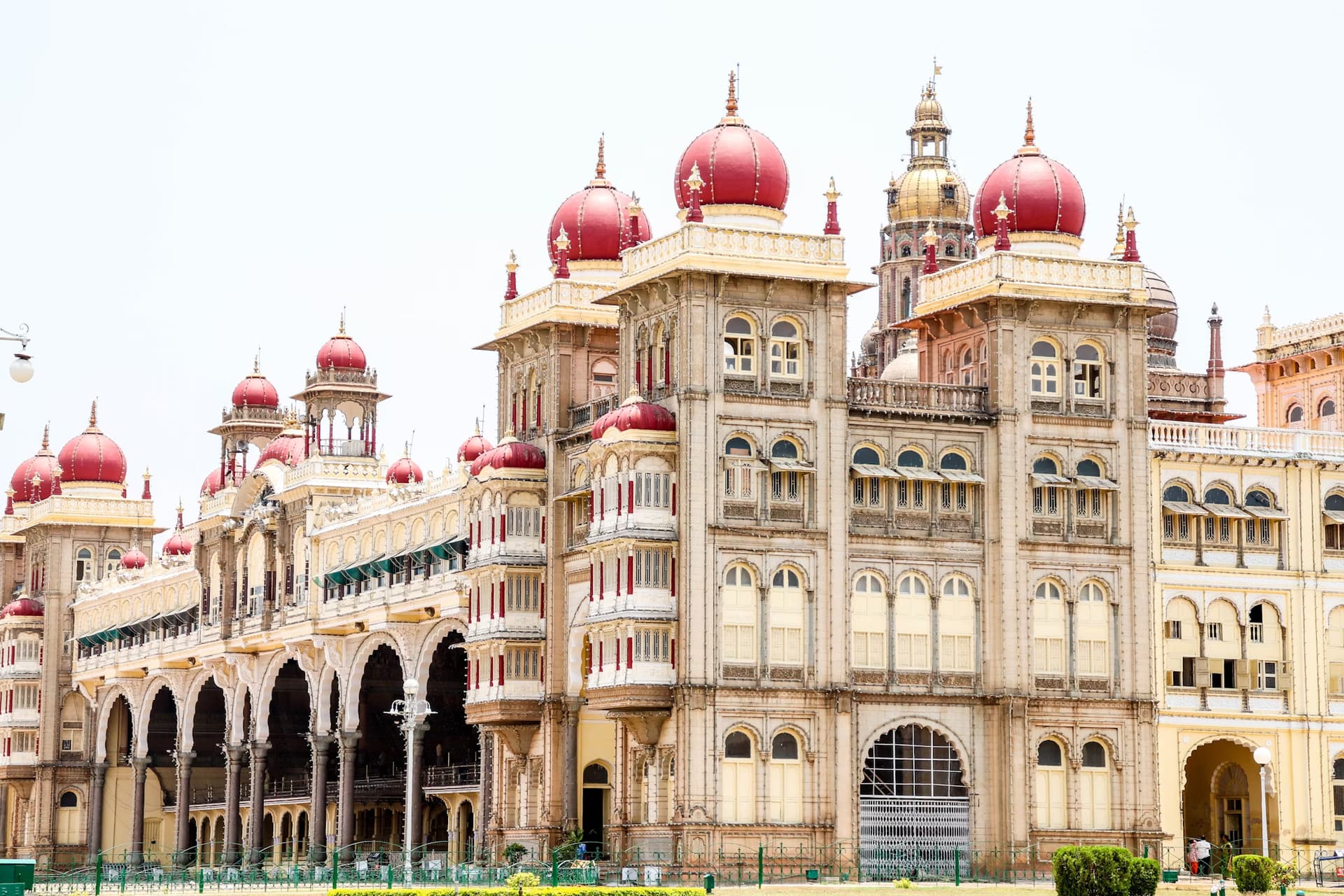
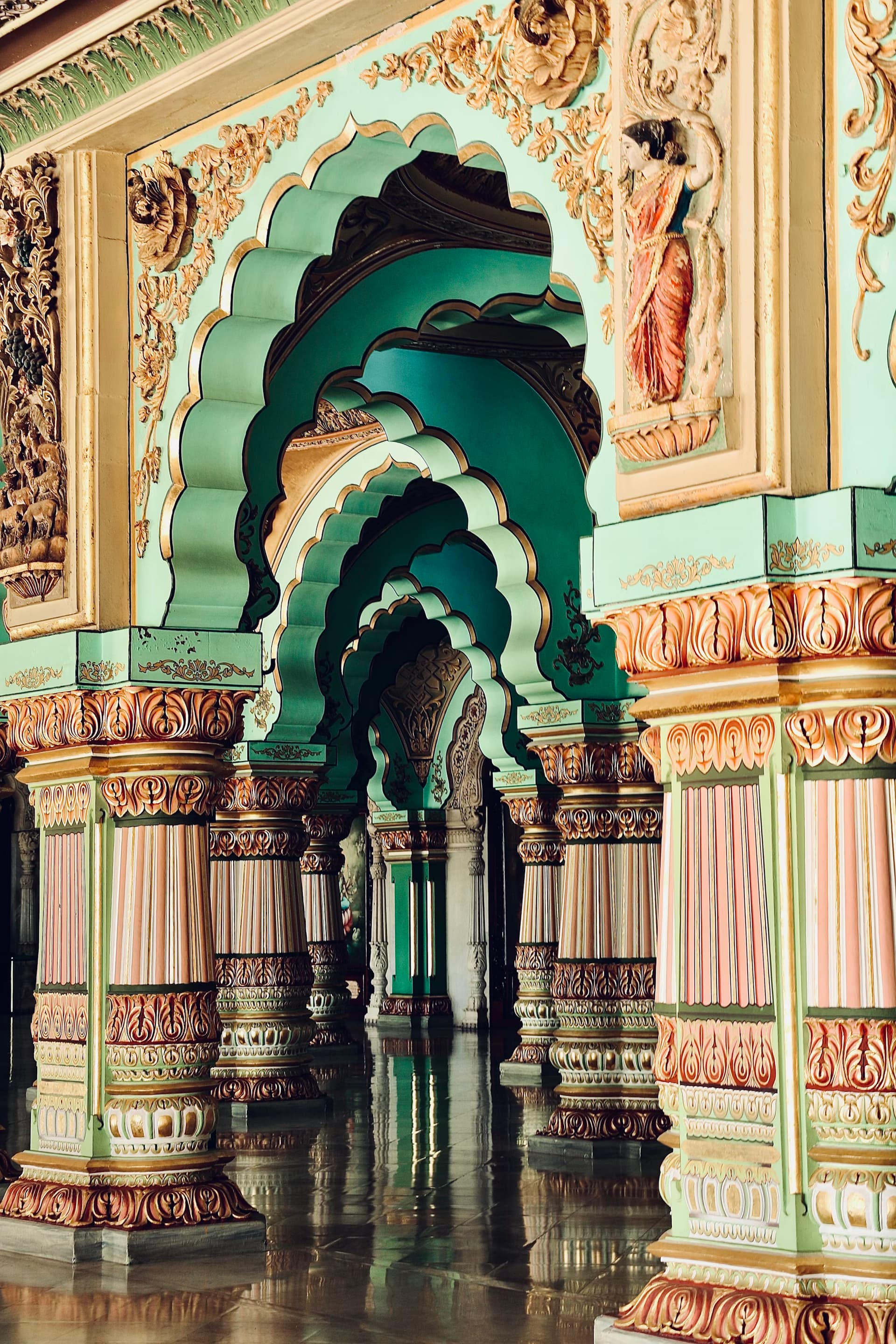
Style and Design: The Mysore Palace showcases a fusion of Hindu, Islamic, Gothic, and Rajput architectural styles. This eclectic design is characterized by intricate ornamentation, domes, arches, and towers.
Exterior: The facade of the palace is made of pink and yellow sandstone, with elaborate carvings and decorative elements. The central dome, along with the smaller domes and turrets, gives the palace its distinctive silhouette.
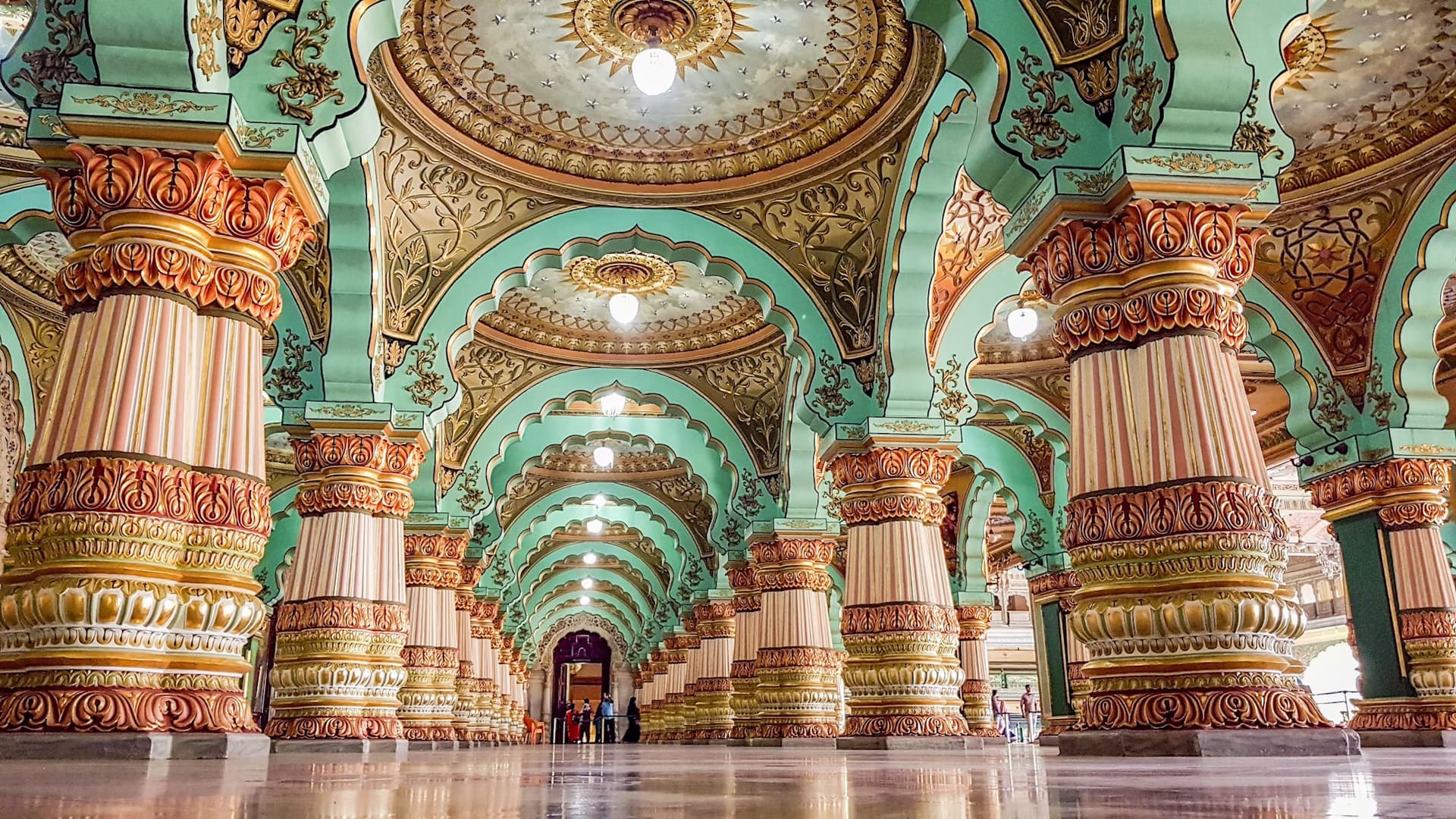
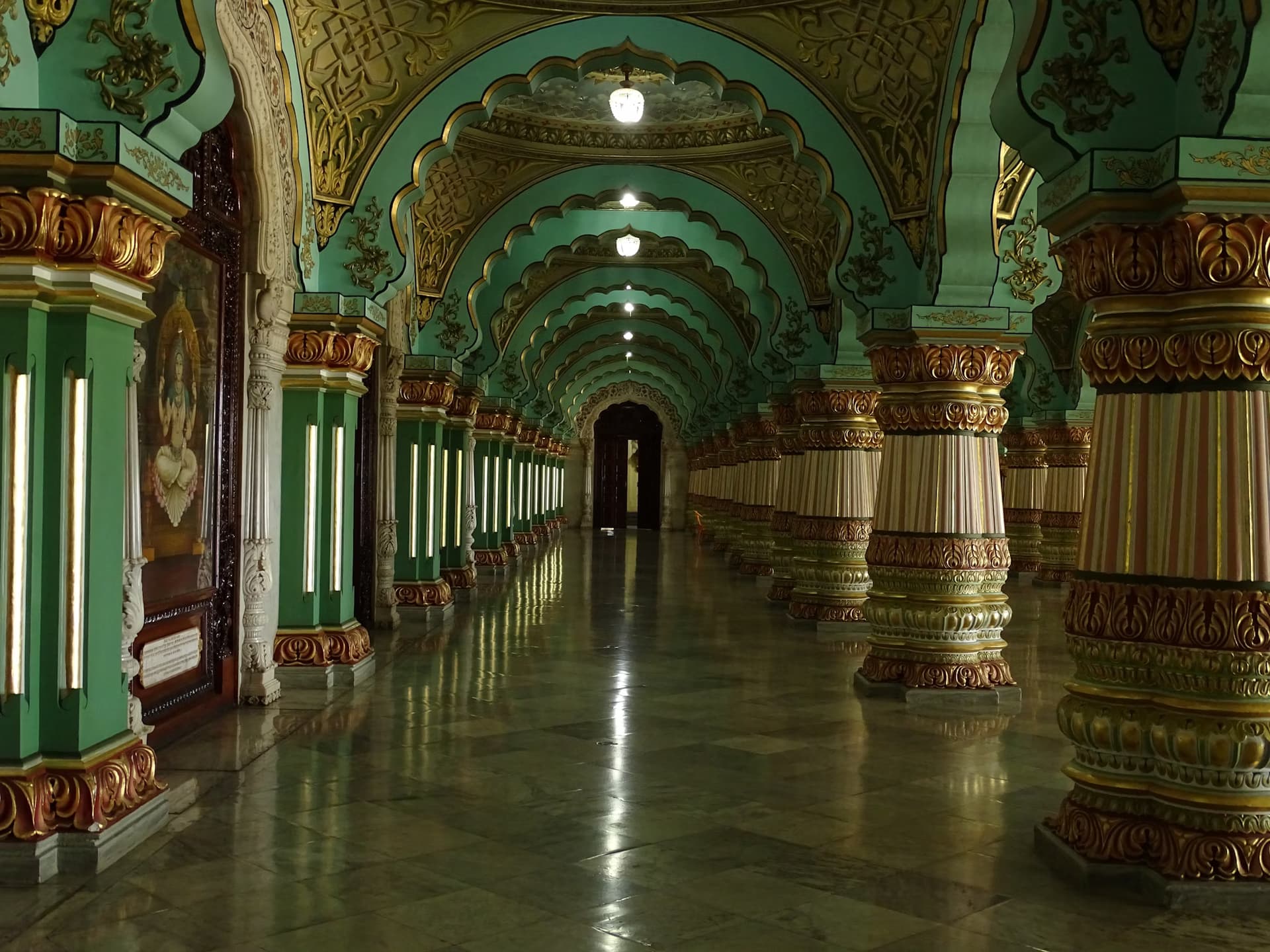
Interior: The interior of the palace is equally impressive, featuring opulent rooms with rich decor. Highlights include the Kalyana Mantapa (marriage hall), adorned with stained glass windows and exquisite wooden carvings, and the Durbar Hall, with its magnificent ceiling and lavish furnishings.
Floor Plan: The palace is spread over an area of 72 acres and includes various courtyards, gardens, and administrative offices. The layout reflects the traditional principles of Vastu Shastra, which govern Indian architecture.
Key Features and Attractions:
Ambassador's Room: The richly decorated room used for official functions and meetings. It showcases the grandeur of the Wadiyars’ reign.
Kalyana Mantapa: The wedding hall is known for its ornate decoration, including a lavish wooden ceiling and beautiful stained glass.
Durbar Hall: The grand hall used for royal ceremonies and public audiences, featuring a striking ceiling and opulent furnishings.
Art Collections: The palace houses a collection of art and artifacts, including portraits of the Wadiyar rulers, antique furniture, and royal regalia.
Cultural Heritage:
Mysore Palace is a symbol of the cultural and historical heritage of Karnataka. It reflects the rich traditions of the Wadiyar dynasty and the cultural amalgamation of different architectural styles. The palace is also a center for the annual Dussehra festival, during which it is illuminated with thousands of lights and becomes a focal point of celebrations.
Nearby Attractions:
Chamundi Hill: A prominent hill with a temple dedicated to the goddess Chamundeshwari, offering panoramic views of Mysore.
St. Philomena's Church: An impressive neo-gothic church known for its stained glass windows and towering spires.
Mysore Zoo: One of the oldest and most well-maintained zoos in India, located near the palace.
Local Cuisine:
Mysore Pak: A traditional sweet made from gram flour, ghee, and sugar, originating from Mysore.
Rawa Idli: A popular South Indian dish made from steamed rice cakes, often enjoyed with chutney and sambar.
Masala Dosa: A crispy rice crepe filled with a spicy potato mixture, commonly served with chutneys and sambar.

Leave the planning to a local expert
Festivals and Events:
Dussehra: The most famous festival celebrated at the Mysore Palace, featuring grand processions, cultural performances, and the illumination of the palace.
Ugadi: The Kannada New Year is celebrated with various cultural events and traditional rituals in Mysore.
Accommodation and Stays:
Luxury Hotels: Options like the Radisson Blu Plaza Hotel and The Windflower Resort offer luxurious stays with proximity to the palace.
Mid-range Hotels: Several mid-range hotels provide comfortable accommodations at reasonable prices.
Budget Lodging: Budget hotels and guesthouses offer economical lodging options for travelers.
Tips for Visitors:
Dress Code: Visitors are required to dress modestly when visiting the palace. Western-style clothing is acceptable, but it should be respectful of the cultural setting.
Photography: Photography is restricted in certain areas of the palace, so be sure to follow the guidelines provided at the entrance.
Guided Tours: Taking a guided tour can enhance your understanding of the palace’s history and architectural details.
Conclusion:
Mysore Palace stands as a magnificent example of Mughal and Indian architectural grandeur, representing the rich cultural heritage of the Wadiyar dynasty. Its opulent design, historical significance, and cultural relevance make it a must-visit destination in Mysore. The palace not only offers a glimpse into the regal lifestyle of the past but also continues to play a central role in the cultural life of the city.