A week long adventure in Bhutan
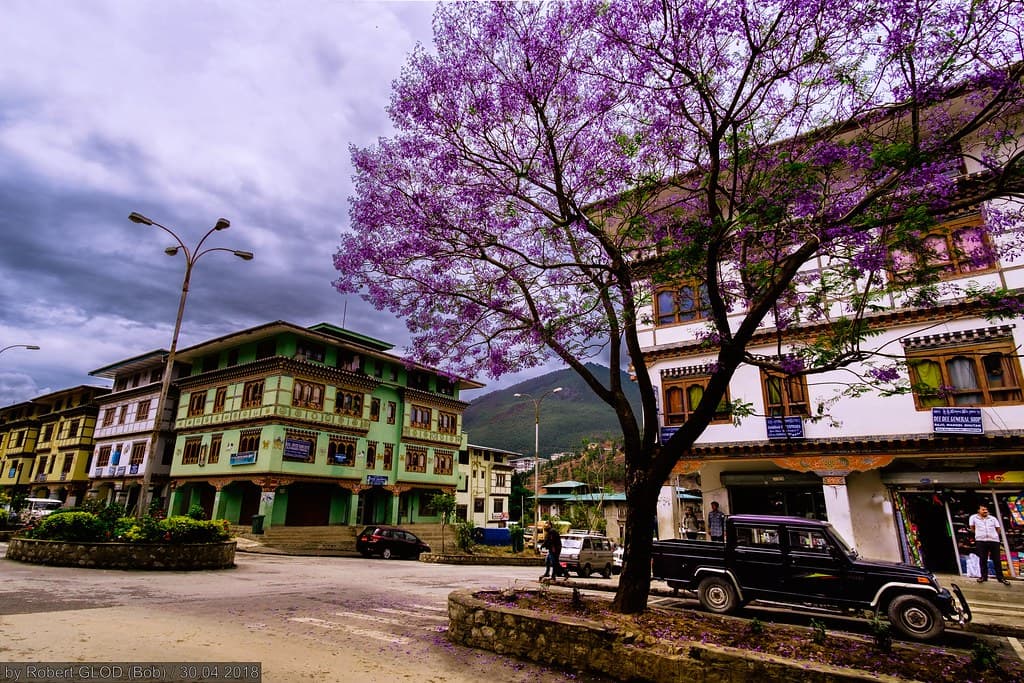
Bhutan, often called the Land of the Thunder Dragon, is a Himalayan kingdom where tradition and nature are deeply intertwined. This small yet captivating country is known for its monasteries, fortresses, and rich cultural heritage. Paro, a town that houses the iconic Tiger's Nest Monastery, is a gateway to Bhutan's spiritual heart. Punakha, with its majestic dzong, offers a glimpse into the country's royal history. Gangtey, nestled in the Phobjikha Valley, is a peaceful retreat home to the endangered black-necked cranes. Meanwhile, Thimphu, Bhutan’s capital, blends modernity with ancient customs, making it a dynamic place to experience Bhutanese culture and daily life. Each of these places reveals a different side of Bhutan's unique charm.
Tour Highlights
- A trip to Bhutan offers a rich mix of cultural and natural experiences, with each destination offering something unique.
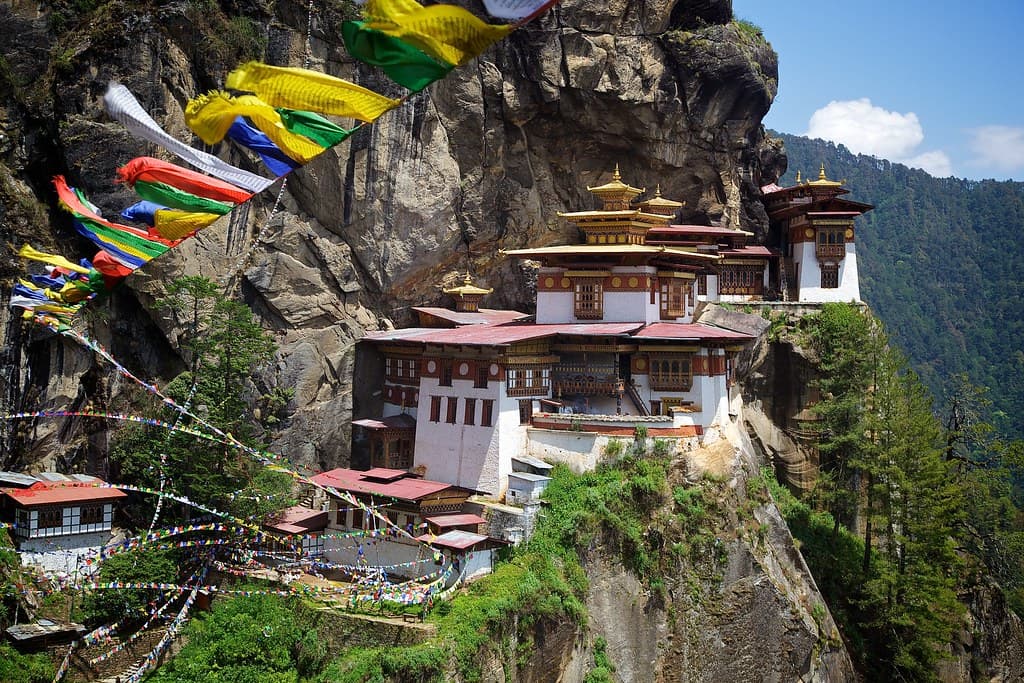
- In Paro, you can visit the iconic Tiger’s Nest Monastery perched on a cliff and explore the historical Rinpung Dzong.
- Punakha stands out for its majestic Punakha Dzong, located at the confluence of two rivers, and the nearby suspension bridge that offers impressive views.
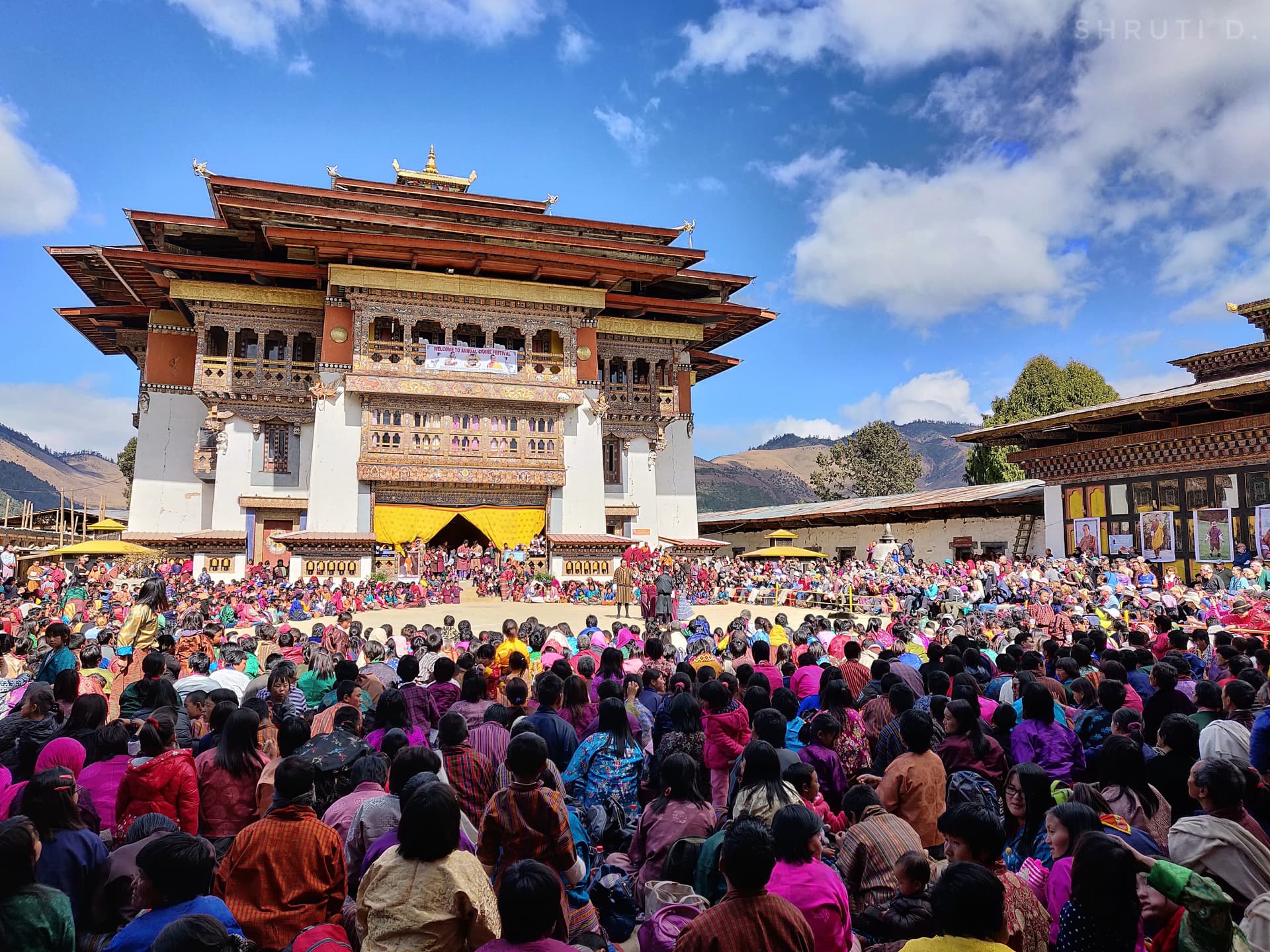
- Gangtey (Phobjikha) Valley is known for its wide-open spaces and as the winter home of the endangered black-necked cranes, adding a touch of wildlife interest.
- Thimphu, the capital, combines traditional and modern Bhutan, with landmarks like the massive Buddha Dordenma statue and the colorful weekend market offering a vibrant city experience.
- Each location presents a different facet of Bhutan's rich heritage and landscape.
Itinerary
Day 1Arrival in Paro and Transfer to Thimphu
Arrival in Paro and Transfer to Thimphu
After clearing immigration at Paro Airport, meet your Bhutanese guide and head towards Thimphu, Bhutan's capital.
Stop at Chuzom, where the Thimphu (Wang Chhu) and Paro (Pa Chhu) rivers meet. You'll see three unique stupas here, each reflecting Bhutanese, Tibetan, and Nepalese architectural styles.
Upon arriving in Thimphu, check-in at your hotel. The evening is free for you to explore at your leisure.
Overnight stay at the hotel in Thimphu.
Day 2Exploring Thimphu
Exploring Thimphu
After breakfast, enjoy a city tour of Thimphu.
Visit Kuensel Phodrang to see the Buddha Dordenma Statue, which stands atop a hill and provides a magnificent view of Thimphu.
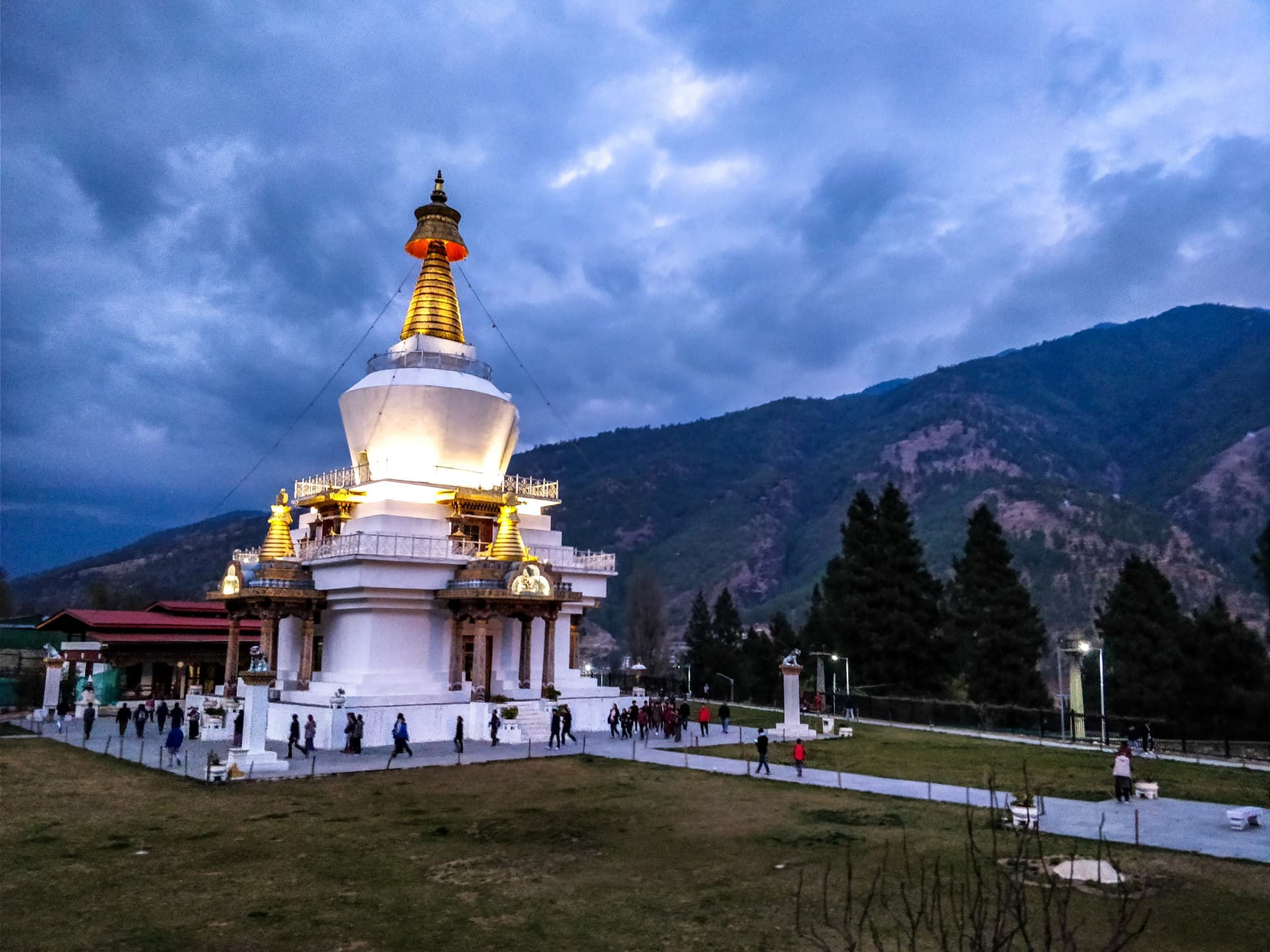
Explore the National Memorial Chorten, built in 1974 to honor the third King, Jigme Dorji Wangchuck, where you'll see locals offering prayers.
Discover Bhutanese culture at the Folk Heritage Museum, which showcases traditional Bhutanese life and rural artifacts.
Visit Changangkha Lhakhang, one of the oldest temples in Thimphu, followed by a trip to Motithang Takin Reserve, home to Bhutan's national animal, the Takin.
In the evening, visit Tashichho Dzong, a grand fortress that houses government ministries, His Majesty’s secretariat, and the central monk body.
Stay overnight at the hotel in Thimphu.
Meals: Meals: Breakfast
Day 3Journey to Punakha / Wangdue
Journey to Punakha / Wangdue
After breakfast, set off for Punakha.
Pause at Dochula Pass, located at an altitude of 3,100 meters, where you can view the 108 Druk Wangyal Stupas.
Continue your journey to Punakha / Wangdue. Upon arrival, hike for 30-45 minutes to Chimi Lhakhang, the Temple of Fertility.
Next, visit Punakha Dzong, situated at the confluence of the Mo Chhu and Po Chhu rivers.
Check-in at your hotel. The evening is yours to spend as you wish.
Spend the night at the hotel in Punakha / Wangdue.
Meals: Meals: Breakfast
Day 4Excursion to Gangtey (Phobjikha) OR Punakha / Wangdue Sightseeing
Excursion to Gangtey (Phobjikha) OR Punakha / Wangdue Sightseeing
After breakfast, choose between two activities:
Option 1: Visit Gangtey, a stunning glacial valley and winter home to the Black Necked Crane. Also, visit Gangtey Goemba, a monastery of the Nyingmapa School of Buddhism, and the Black Necked Crane Information Centre, which offers crane-watching equipment and reference books. Return to your hotel in the evening.
Option 2: Hike to Khamsum Yuelley Namgyal Chorten, a 45-minute trek that rewards you with breathtaking views of the Punakha Valley. Also, visit Punakha Suspension Bridge and Sangchhen Dorji Lhuendrup Nunnery. Spend the rest of the day at your leisure.
Overnight stay at the hotel in Punakha / Wangdue.
Meals: Meals: Breakfast
Day 5Punakha / Wangdue to Paro with Sightseeing
Punakha / Wangdue to Paro with Sightseeing
After breakfast, drive to Paro, stopping at the Royal Botanical Garden at Lamperi, Bhutan’s first botanical park.
Continue your journey to Paro, with a stop at the Immigration Check Point in Hongtsho Village to return your permit.
Visit Tamchog Lhakhang, a 13th-century temple built by Thangthong Gyalpo, known as the Iron Bridge Builder.
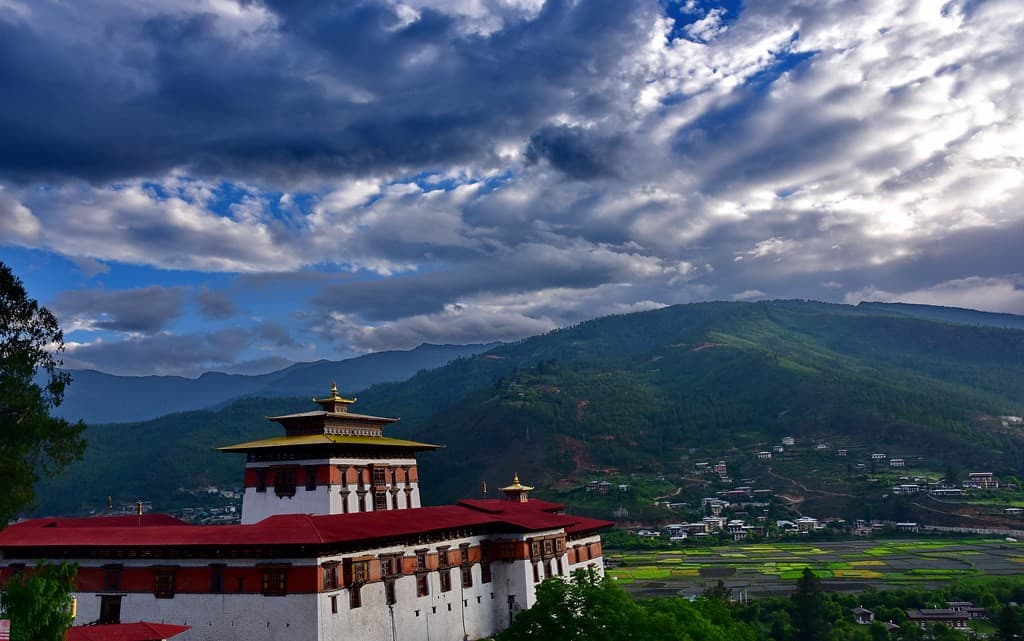
Upon arrival in Paro, visit Ta Dzong, an ancient watchtower that now serves as the National Museum, and Paro Rimpung Dzong, also known as the Fortress of the Heap of Jewels.
Walk down to Nemi Zam Bridge, a traditional cantilever bridge connecting Paro town to the Dzong.
Check-in at your hotel. The evening is free for you to enjoy.
Spend the night at the hotel in Paro.
Meals: Meals: Breakfast
Day 6Paro Sightseeing
Paro Sightseeing
After breakfast, go on a hike to Taktsang Monastery (Tiger's Nest), perched at an altitude of 3,100 meters in the Upper Paro Valley. According to the legend, Guru Rinpoche arrived here on the back of a tigress and meditated at this monastery.
The hike takes about 5-6 hours and involves steep inclines and stairs, so it may not be suitable for small children or the elderly.
On your way back, visit Kyichu Lakhang, one of Bhutan's oldest and most sacred temples.
Overnight stay at the hotel in Paro.
Meals: Meals: Breakfast
Day 7Departure from Paro
Departure from Paro
After breakfast, you'll be driven to Paro Airport for your return journey. Tashi Delek!
Meals: Meals: Breakfast
What to Expect from this Trip
A trip to Bhutan, including Paro, Punakha, Gangtey (Phobjikha), and Thimphu, offers a mix of rich culture, unique landscapes, and spiritual experiences. In Paro, you'll find the iconic Tiger's Nest Monastery, while Punakha is home to the stunning Punakha Dzong, a riverside fortress with deep historical significance. The Phobjikha Valley in Gangtey is a peaceful place, known for its wildlife, especially the black-necked cranes. Thimphu, Bhutan's capital, combines tradition and modernity, with attractions like the Tashichho Dzong and local markets giving insight into the country's way of life.
Accommodations
A charming 3-star hotel on all days, providing a comfortable stay.
Backpackers United Team
Our team will arrange a Bhutanese guide and a driver, ensuring that you have a comfortable and seamless travel experience throughout the trip.
What's in your package
What is Included
- Accommodation on twin sharing basis in hotels mentioned or similar
- Services of Local English Speaking Guide
- Travel Insurance for guests up to 60 years of age
- Local 01 SIM Card per family on arrival will be provided on a returnable basis
- Sustainable Development Fee (Royalty Fee)
- Bhutan Sector Transfers and Sightseeing by Non AC Toyota Coaster/Hiace/Similar depending on the size
- India Sector Transfers from IXB airport to Phuentsholing by AC Toyota Innova/Indigo/Tempo Traveller Similar depending on the size of the group
- Internal permits for visiting municipal areas
What is Not included
- Any Air or Rail fare
- Monument entrance fee and fee for visiting museums
- Meals that are not mentioned in the itinerary
- Any other destination not mentioned in the itinerary
- Any expenses of personal nature
- Anything not mentioned in the "What's included" section
Things to Carry
Warm clothing
Sun Cap / Hat
Sunscreen SPF 40+
Personal Toiletries
Personal Medication / First Aid
Charger
Power Bank
Personal Documents & ID's
Woolen Socks
Woolen Gloves
Main Jacket
Hoodie
Moisturiser & Cold Cream
Camera
You pick the weekend.
We map the route.
Join a small group of travellers on our next departure. Overnight bus, curated stays, handled logistics — you just show up with a bag.


Frequently asked questions
What is the best time to visit Bhutan?
Do I need a visa to visit Bhutan?
What kind of clothing should I pack for Bhutan?
What is the local currency in Bhutan?
How easy is it to travel between Paro, Punakha, Gangtey, and Thimphu?
Are there any must-see attractions in Paro?
What makes Punakha Dzong special?
Is Gangtey (Phobjikha) Valley worth visiting?
Is Bhutan an eco-friendly destination?
Is tipping common in Bhutan?
Transparent cancellation policy
Good to know
- Once a flight is booked, it is non-refundable.
- Minimum 8 travellers required for group departures. If the group falls below 8, you'll be offered an alternative.
- In case of weather, strikes or government restrictions, trips may be modified. Cash refunds aren't issued in such cases.
- For international bookings, 5% GST + 3% booking fee is non-refundable.
| Days before departure | Cancellation charge | Refund |
|---|---|---|
| 15–30 days | 25% | 75% refunded |
| 7–15 days | 50% | 50% refunded |
| 3–7 days | 75% | 25% refunded |
| 0–3 days | 100% | No refund |