Bali Pass trek
9 Days / 8 Nights through the Western Ghats. Transport, meals and accommodation included. ₹9,999/person.
₹9,999/ person
Trek at a Glance
Duration
9 Days / 8 Nights
Overview
The Bali Pass trek is a thrilling adventure nestled in the Garhwal Himalayas of Uttarakhand, India. Spread across to an average of 70 kilometers, this challenging trek takes around 9 to 10 days to complete, offering you trekkers, a transformative journey through diverse landscapes, different climate and isolated panoramic views!
Beginning from the quaint village of Sankri, the trail winds through lush meadows, dense forests, and rugged terrains, gradually ascending to higher altitudes. You would walk through remote villages and immerse themselves in the rich culture and hospitality of the local communities.
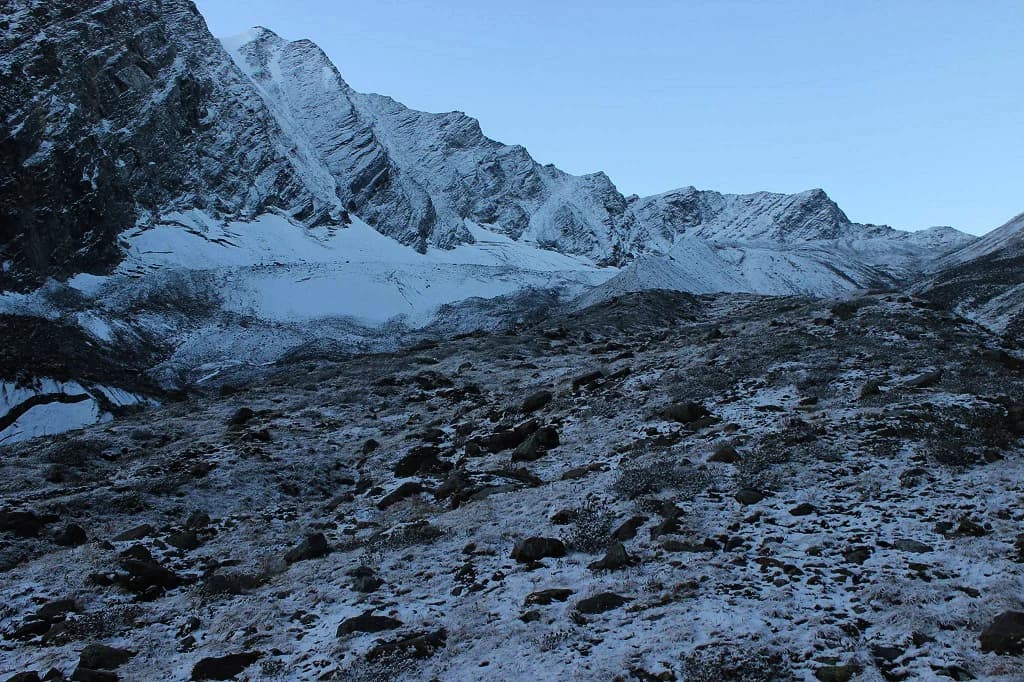
As the trek progresses, the scenery transitions from verdant valleys to alpine meadows colored with vibrant wildflowers, with towering peaks looming in the backdrop. The highlight of the trek is crossing the Bali Pass, situated at an elevation of around 4,800 meters. This tricky pass offers breathtaking views of snow-capped peaks, including Swargarohini, Bandarpoonch, and Kalanag.
The climb to Bali Pass demands physical endurance and acclimatization due to the high altitude and unpredictable weather conditions. You will navigate through steep inclines, rocky terrain, and snow patches, making it a test of both strength and perseverance.
Upon conquering the pass, you shall be rewarded with a sense of accomplishment and unparalleled sceneries of the surrounding Himalayan peaks. A painting that has come to life! The descent from Bali Pass leads to the picturesque Yamunotri valley, where trekkers can visit the sacred Yamunotri temple before concluding their journey in the village of Janki Chatti.
Overall, the Bali Pass trek offers a life changing experience for all you adventure enthusiasts, providing an opportunity to connect with nature, challenge personal limits, and witness the breathtaking beauty of the Himalayas.
Itinerary
The following detailed itinerary provides a day-by-day breakdown of your exciting Bali Pass trek. From your arrival to the moment you return home, we've outlined your activities and experiences to make the most of your trek. Let's dive into the specifics.
Dehradun to Sankri via Mussoorie & Purola - 8 hours drive
Our journey begins from Dehradun, making it a good option for people looking for treks near Delhi. Driving alongside the Tons river, and passing villages in Uttarakhand like Damta, Purola, Mori, and Netwar, we will reach the base camp Sankri. There is no network in this village, letting us take in the sight of the sun gloriously setting over the surrounding Greater Himalayan peaks without any distractions. We will be accommodated in hotels or homestays here.
Sankri (1,920 m) to Seema (2,560 m) - 1 hour drive to Taluka & trek to Seema + 5-6 hours trek
A few hours and crossing over a few streams later, we see the village of Gangad across the river on the left. We continue our hike and after about an hour, the quaint village of Osla unfolds itself. Osla is a household name among trekkers.
Home to about 200 families, it gives us a peek into Garwahli culture. Seema is a tiny settlement opposite to Osla on the other side of the river. We set camp here or stay in a hut with a local family in the village.
Seema (2,560 m) to Roiltia or Waterfall camp (3,350 m) - 6-7 hours trek
Leaving the last of human settlements behind, we continue along the true left of the valley along the river Supin. Supin merges with Rupin near Netwar village to form Tons, which is the biggest tributary of river Yamuna. An ascend through deodar trees leads us to a beautiful meadow – Devsu Thatch. This 1km expanse of green land is set against the looming Swargarohini ranges.
We can also see Kalanag (Black Peak) (6387m) straight ahead. On our left, we can see Har Ki Dun Valley. At its bottom lies the confluence of Har Ki Dun and Ruinsara rivers.
Roiltia to Ruinsara lake (3,600 m)- 2 hours trek
Today's journey is going to take in under 2 hours even at a slow pace. And within this hike itself we notice a stark change in vegetation. Pine and fir trees give way to birch and rhododendron trees. We then reach one of the highlights of the trek — Ruinsara Tal, an alpine tarn, surrounded by lush Rhododendron trees, with their distinct pink bloom in the summers.
We will be left enchanted by this sacred lake in the Uttarakhand Himalayas. It is one of the trio of lakes in the Garhwal region, the other two lakes being Marinda and Maldaru. We will be camping overnight near the lake.
Roiltia to Ruinsara lake (3,600 m)- 2 hours trek
Lying at an elevation of about 3500 m, Ruinsara lake is a good place to acclimatize ourselves before reaching Bali Pass base camp the next day. Ruinsara Tal’s reputation precedes itself for its beauty. The small and pristine lake lies within a vast meadow, alpine vegetation and surrounding rhododendron bushes. There is innumerable variety of alpine flowers growing around the lake. The river Supin is situated 100 meters below the lake, next to a ridge.
Ruinsara lake to Odari (4,100 m)- 4-5 hours Trek
We start the day early so as to reach our destination before afternoon. We descend down to the shallow river bed, cross over to the opposite bank and walk uphill to another beautiful meadow – Thanga. This meadow also offers awe-inspiring views of the seemingly omnipresent Swargarohini ranges. Kyarkoti valley lies towards the left.
Odari (4,100 m) to upper Dhamni (4,000 m) via Bali pass (4,900 m)- 7-8 hours
This day of crossing Bali Pass too begins very early. We strive to reach the summit by 8am. The trail heads down south, over a ridge. It is a fairly short but steep climb up to the Pass.
A lot of glacial scree will be encountered here. Time taken to reach the top ranges from 45 minutes to one and a half hours. Once we reach the top, we behold the Yamunotri valley for the first time. The view is breath- taking. We see hints of the Saptrishi Kund, which is the origin of river Yamuna. We also get to witness the Banderpunch peaks from the top of the Pass.
The summits of Dayara Bugyal, Barua Top and Dokrani Bamak are visible too. We then descend carefully via a connecting ridge and reach the camping grounds of upper Dhamni.
Upper Dhamni (4,000 m) to Yamunotri to Janki Cha tti (2,400 m)- 7-8 hours trek
We descend further to a forested trail. This path leads us to the famous shrine of Yamunotri with the glorious Bandarpunch in its background. One of the temples in the Char Dham circuit, it is dedicated to Goddess Yamuna.
After paying obeisance to her black marble idol, we make our way down the conventional pilgrim road to Janki Chatti. We stay overnight in one of the guesthouses here. We will get electricity but no phone network.
Janki Chatti to Dehradun - 7 hours drive
This is the final day of the trip and we drive back to Dehradun. We can make the most of this jourey by visiting other well-known places that fall on this route such as Kempty waterfalls, Nainbagh and Mussourie. With equally beautiful memories of an offbeat trek and touristy sight-seeing, we have a cherishable experience.
Inclusions & Exclusions
What's Included
- Delicious, Hygienic & Nutritious Meals on scheduled time (Morning Tea, Breakfast, Lunch, Evening Snacks & Dinner)
- Accommodation of 8 days during the trek will be provided using Dome / Alpine trekking tents on double or triple sharing basis.
- All campaign equipments Medical Kit.
- Professional Trek Leaders (Experienced Guide/Staff) All forests permits
- Adventure gears for team (Ice axe, walkie talkies, oximeter).
- Experience trekking Cook for the Trek.
What's Excluded
- Travel insurance and other emergencies.
- Mules (A Hybrid Animal) to carry personal luggage Single room accommodations
- Hard Drinks (This also includes undistilled fermented beverages)
- Photography accessories like cameras etc.
- Any tips, laundry, Phone call, liquors, mineral water, camera fee or any other personal nature expenses.
What to Expect
Bali Pass trek is literally a life changing experience. Through snow capped mountains shadowing you to forests so dense and mesmerizing you lose yourself completely! This ten day trek is a way to connect to yourself and gain a deeper perspective. Who knows, you might come down and write a song or even a book ! Book now with Backpackers United and join us on this amazing adventure.
Accommodations
Backpackers United
Backpackers United will accompany the entire trip, and local backpackers will join along the way.
Starting from

Local Expert
Leave planning to our Bangalore team. 50,000+ treks. 7 years.
Call us anytime
+91 83108 22183
Frequently Asked Questions
9 questionsHow can I confirm my booking?
You can directly reserve your slots by booking on the website, please ensure proper dates are selected before confirming your booking.
Is it safe for female travellers?
Safety and Security Guidelines are followed at all times, and it is our topmost priority. We have certified trek leads (male and female) accompanying the participants at all times and our stay follows well-rounded safety measures.
What payment options do I have?
We have multiple payment options on the website that you can refer to.
How difficult is the Bali Pass Trek?
The Bali Pass is a quite tough trek, as it takes you up to a very high point at 5,227 meters (16,240 feet). - Getting to the Bali Pass base camp from Odari is especially hard, especially from April to June when there’s a lot of snow. The last part is super steep and needs both strength and experience. Coming down also has some tricky parts at the beginning that you need to be careful with. After Upper Damini, the path is well-marked and takes you to Yamunotri.
How is the weather of Bali Pass trek?
In May and June, summer brings nice weather with warm, sunny days on the trail. There’s plenty of sunlight, and you’ll find shaded spots for resting. Evenings might feel a bit cool, so having an extra warm layer of clothing is a good plan. Sometimes, it might rain a little in the afternoon, so be ready for that. Once you go past Odari, remember that because you’re up high, it could snow if the weather gets bad. The first three weeks of September bring a really amazing sight in the Himalayas. This short time, with not much rain or snow, shows a world of lively beauty and untouched nature. The meadows explode with lots of colors as wildflowers, excited by the rain, bloom in a spectacular way. Tall grasses sway gently, adding to the vibrant scene. The melting snow uncovers a path of rocks and sand, showing the way to the Bali Pass. As September ends and October brings a chill, the first snowflakes start to fall gently. This tells us that the pass will close soon. This quick change from warm summer to cool winter shows how nature always changes in beautiful ways
What are the top attractions of the Bali Pass trek?
As you trek along, you’ll see really tall mountains like Black Peak (6,387 m), the big Swargarohini Massif, and the strong Bandarpunch Massif. You’ll be able to see towering peaks like Black Peak (6,387 m), the majestic Swargarohini Massif, and the imposing Bandarpunch Massif along the trek. In the heavily wooded areas between Osla and Ruinsara Lake, you may come across Black Bears. Further up, towards the Dhumdhar Kandi pass, you can find Brown Bears. Blue Sheep is another prominent species found in the area. The pass itself feels more like a summit than a low point of the trek. The last stretch to the pass offers incredible panoramic views as a reward.
What is the altitude of bali pass basecamp?
The altitude of Bali Pass Basecamp is 4,600 meters (16,250 feet) above mean sea level.
How is the Bali Pass trek in october and September?
September and October are perfect for the Bali Pass trek after the monsoon. The weather is lovely—clear skies, sunny days, and mild temperatures (10-15°C)—ideal for a comfortable trek without the summer heat
What is the meaning of Bali Pass Trek?
Bali Pass got its name from the ancient stories of the Mahabharata and Hindu scriptures. Bali, known as the king of monkeys, ruled over Kishkindha Mountain and is celebrated as the one who defeated Ravana.
Transparent cancellation policy
Good to know
- Once a flight or train is booked, it is non-refundable.
- Minimum 8 trekkers required for group departures. If the group falls below 8, you'll be offered an alternative.
- In case of weather, strikes or government restrictions, trips may be modified. Cash refunds aren't issued in such cases.
- 5% GST + 3% booking fee is non-refundable on all bookings.
| Days before | Charge | Refund |
|---|---|---|
| 15–30 days | 25% | 75% refunded |
| 7–15 days | 50% | 50% refunded |
| 3–7 days | 75% | 25% refunded |
| 0–3 days | 100% | No refund |